 |
King of Chemicals Manufacturers Potassium Salicylate or Salicylic acid potassium salt or Benzoic acid 2-hydroxy- monopotassium salt and API BP Ph Eur EP USP NF IP JP ChP PPRC Reagent FCC Food Grade Manufacturer |
Specifications, Properties, Uses, SDS of Potassium Salicylate or Salicylic acid potassium salt or Benzoic acid 2-hydroxy- monopotassium salt Manufacturer Supplier Exporter Wholesale & Small Packs, CAS Number 578-36-93. | |
| King of Chemicals has several associated companies having accreditations like cGMP, GLP - FDA Approved Good Manufacturing Practice and Good Laboratory Practice of WHO standard, ISO-9001, ISO-14001, ISO/IEC 17025, ISO ISO-45000, HACCP, FSSC 220000, FSSAI, "REACH" Registered, Kosher & Halal Certified. e-CTD and DMF support can be made available if needed. We offer API USP NF BP Ph Eur EP IP JP ChP PPRC Analytical Reagent FCC Food Grade Chemicals & Nutraceuticals. | |
         | |
 ------

Muby Chem Pvt. Ltd. is a several decades old group of companies, engaged in manufacturing, supplying, distributing, wholesale supplies of Potassium Salicylate or Salicylic acid potassium salt or Benzoic acid 2-hydroxy- monopotassium salt for actual users, including retail or small pack supplies for research and development work.
We supply fine and speciality chemicals, pharmaceutical excipients, mineral fortifiers in chemically pure, analytical reagent grade, API IP BP USP Ph Eur EP JP ChP PPRC and other pharmaceutical grade monograph including FCC Food grade chemicals and Nutraceuticals at best prices. We and/or our associated units have all the facilities to supply as per cGMP standard observing good manufacturing practice and good laboratory practice. We can assure low microbial count and also offer a test certificate for the same. We maintain warehouses across USA, India, and UAE. Our group exports to USA, Canada, Mexico, Argentina, Brazil, Chile, Korea, Malaysia, Thailand, Indonesia, Europe, and several other parts of the world. We supply in wholesale container loads to small pack of few grams. Solid products may be specified for it size and shape as desired by the buyer.


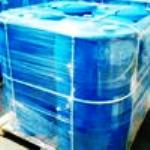
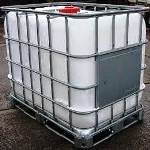
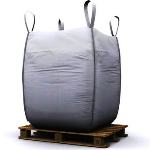
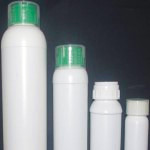
Potassium Salicylate or Salicylic acid potassium salt or Benzoic acid 2-hydroxy- monopotassium salt CAS Number 578-36-93
For Properties Specifications Uses of Potassium Salicylate Click Properties, Specifications, Uses, Price, Process of Potassium Salicylate Manufacturer.
For For SDS MSDS Sheet of Potassium Salicylate Click SDS Safety Data Sheet MSDS Sheet of Potassium Salicylate Manufacturer.
The Properties, Specifications, Monograph and Uses of Potassium Salicylate:
Potassium salicylate is the water-soluble potassium salt of salicylic acid, used primarily as an antimicrobial preservative, an anti-inflammatory and analgesic agent, and a chemical intermediate. It is widely applied across cosmetics, pharmaceuticals, and industrial manufacturing. It is used in Antimicrobial preservative, Skin-soothing agent, Keratolytic support, Pain and fever relief, Topical pain treatments, Chemical manufacturing, Biochemical buffering, Food preservation, etc.
General Properties and Specifications of Potassium Salicylate or Salicylic Acid Potassium Salt or Benzoic acid 2-hydroxy- Monopotassium Salt:
CAS Number: 578-36-93
Appearance: White crystalline powder.
Identification: Gives reaction of potassium salts.
Moisture by KF: NMT 0.5%
Assay as is basis: NLT 99.0% and NMT 101.0% on dried basis.
Assay on dried basis: NLT 99.0% and NMT 101.0% on dried basis.
Melting Point: 197C to 200C literature.
Boiling Point: around 211C to 213C literature.
Solubility: Freely soluble in water.
Storage: Store at room temperature.
The MSDS-SDS Hazard Statement of Potassium Salicylate:
Potassium Salicylate or Salicylic Acid Potassium Salt or Benzoic acid 2-hydroxy- Monopotassium Salt SDS, Safety Data Sheet
MSDS Sheet, Material Safety Data Sheet
1. Product Identification
Product Name & Other Names: Potassium Salicylate or Salicylic Acid Potassium Salt or Benzoic acid 2-hydroxy- Monopotassium Salt.
CAS Number: 578-36-93
EINECS EC Number: 209-421-6
Molecular Formula: C7H5KO3
Molecular Weight: 178.21
Relevant uses and uses advised against (if any): Industrial Manufacturing.
Suppliers: As per letterhead.
2. Hazards Identification
GHS, Globally Harmonized System Classification in accordance with 29 CFR 1910
Classification according to Regulation (EC) No 1272/2008
Acute toxicity, Oral Category 4 - H302
Serious eye damage Category 1 - H318
Labeling according to GHS USA & Regulation (EC) No 1272/2008
GHS Label Elements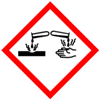 Corrosive |
Signal Words: Danger
Hazard Statements:
H302: Harmful if swallowed.
H318: Causes serious eye damage.
Precautionary Statements:
P260: Do not breathe dust/fume/gas/mist/vapors/spray.
P262: Do not get in eyes, on skin, or on clothing.
P264: Wash contaminated parts thoroughly after handling.
P270: Do not eat, drink or smoke when using this product.
P271: Use only outdoors or in a well-ventilated area.
P280: Wear protective gloves/protective clothing/eye protection/face protection.
P301+P310: IF SWALLOWED: Immediately call a POSION CENTER or doctor/physician.
P305+351+338: IF IN EYES: Rinse cautiously with water for several minutes. Remove contact lenses if present and easy to do – continue rinsing.
P403 P404: Store in well-ventilated place. Keep container tightly closed.
3. Composition/Information on Ingredients
Product Name & Other Names: Potassium Salicylate or Salicylic Acid Potassium Salt or Benzoic acid 2-hydroxy- Monopotassium Salt.
CAS Number: 578-36-93
EINECS EC Number: 209-421-6
4. First Aid Measures
Always seek medical attention after first aid measures are provided.
Inhalation: Remove affected person to fresh air; if normal breathing has not returned within a few minutes after exposure, get medical attention.
Skin: Remove contaminated clothing; wash affected area with soap and water; launder contaminated clothing before reusing. Seek medical attention.
Eyes: Immediately, flush eyes for 15 minutes in clear running water while holding eyelids open; seek medical attention immediately.
Ingestion: Drink two glasses of water followed by milk, milk of magnesia or other non-alcoholic liquids; Do not induce vomiting; seek medical attention immediately.
5. Fire Fighting Measures
General Hazards: Contact with eyes causes immediate severe irritation of the eye and eyelids. The product will burn at high temperature.
Extinguishing Media: Carbon dioxide, dry chemical, chemical foam water fog. Do not use a heavy water stream. Keep containers cool by spraying with water. Use extinguishing media appropriate for surrounding fire.
Fire & Explosion Hazard: May evolve oxides of carbon (COx) and fumes under fire conditions. Potassium compounds will be formed.
Unusual Fire and Explosion Hazards: Closed containers can explode due to buildup of pressure when exposed to extreme heat. Cool containers to prevent pressure buildup and possible explosion when exposed to extreme heat.
Hazardous Combustion Products: Products of combustion include smoke, toxic fumes, oxides of carbon monoxide. Potassium compounds will be formed.
Special Information: In the event of a fire, wear full protective clothing and NIOSH-approved self-contained breathing apparatus with full face piece operated in the pressure demand or other positive pressure mode. At high temperatures under fire conditions, it may produce toxic or irritating fumes.
6. Accidental Release Measures
Personal precautions, protective equipment, and emergency procedures: Avoid breathing dust/fumes/gas/mist/vapors/spray. Use individual protective equipment (waterproof boots, suitable protective clothing, safety glasses, etc.).
Environmental precautions: Do not let the product enter sewer, soil, or water sources.
Methods and materials used for containment Clean-up procedures and Storage: Contain spilled material. Cover with an inert, non-combustible absorbent material, (e.g., sand, earth, diatomaceous earth, vermiculite). Vacuum or sweep up and move to an approved disposal container. It will support combustion. For large spills, confine spill, cover up with approved absorbent, shovel product into approved container for disposal.
7. Handling and Storage
Precautions for safe handling: Apply according to good manufacturing and industrial hygiene practices. Ensure proper ventilation. Wash thoroughly after handling it. Do not drink, eat, or smoke while handling. Avoid contact with skin, eyes, and clothing. Minimize dust generation. Avoid breathing dust/fumes/gas/mist/vapors/spray. Keep container tightly closed. Avoid ingestion and inhalation. Use individual protective equipment (waterproof boots, suitable protective clothing, safety glasses, etc.).
Conditions for safe storage, including any incompatibilities: Store in cool, dry, and ventilated area away from heat sources and protected from sunlight in tightly closed original containers. Keep air contact to a minimum. Do not leave the material container open. Store protected from heat, sparks and ignition sources and incompatible materials. Avoid inhalation of dust/mist/vapor. Do not store with incompatible materials like strong oxidizing agents. Keep container closed when not in use; protect containers from abuse; protect from extreme temperatures, open flames. Storage: Store at room temperature.
8. Exposure Controls/Personal Protection
Exposure Guidelines: Not established.
Engineering Controls: The use of local exhaust ventilation is recommended to control emissions near the source. Provide mechanical ventilation of confined spaces. Use corrosion-resistant, explosion-proof ventilation equipment.
Ventilation System: A system of local and/or general exhaust is recommended to keep employee exposures as low as possible.
Personal Respirators (NIOSH Approved): For conditions of use where exposure to dust or mist is apparent and engineering controls are not feasible, a particulate respirator may be worn.
Skin Protection: Wear protective gloves and clean body-covering clothing.
Eye Protection: Use chemical safety goggles and/or full-face shield where dusting or splashing of solutions is possible. Maintain eye wash fountain and quick-drench facilities in work area.
Other Control Measures: Maintain good housekeeping in work area. Handle in accordance with good industrial hygiene and safety practice.
9. Physical and Chemical Properties
Appearance: White or almost white, crystalline powder or white or colorless, crystals.
Odor: Odorless.
Odor threshold: Not applicable.
pH: No data found.
Relative density: No data found.
Melting point/freezing point: 197C to 200C literature.
Boiling Point: around 211C to 213C literature.
Flash point: No data found.
Auto-ignition temperature: No data found.
Decomposition temperature: No data found.
Upper/lower flammability or explosive limits: No data found.
Vapor Pressure (MM Hg):No data found.
Vapor Density (Air = 1) : No data found.
Evaporation Rate (water = 1): No data found.
Flammability (solid, gas): No data found.
Partition coefficient: n-octanol/water: No data found.
Solubility in Water: Freely soluble in water.
Viscosity: No data found.
10. Stability and Reactivity
Stability: Stable at recommended temperatures and operating conditions. Sensitivity to light.
Conditions to Avoid: Avoid excessively high temperatures and contact with strong oxidizing agents. Direct sunlight. Air contact.
Incompatibilities: Strong oxidizing agent.
Decomposition: Decomposition yields carbon monoxide & dioxide and fumes. Potassium compounds will be formed.
Polymerization: Polymerization will not occur.
11. Toxicological Information
LD50 Oral Rat: No data found.
Reproduction: No data found.
Carcinogenicity: Not listed as a human carcinogen by OSHA, IARC, ACGIH & NTP.
Acute Toxicity: No data found.
12. Ecological Information
Toxicity to fish: Not available.
Persistence and Degradability: Unlikely to persist due to water solubility.
Mobility: Likely to be mobile due to water solubility.
Bioaccumulation/ Accumulation: Inherently biodegradable.
Results of PBT and vPvB assessment: Not PBT or vPvB.
13. Disposal Considerations
Dispose of in accordance with Local, State, and Federal Regulations. Consult local, state, or Federal Environmental Protection Agency before disposing of any chemicals. Follow all the pollution control rules.
14. Transport Information
DOT USA, TDG Canada & ADR/RID Europe: Not controlled.
IMDG/IMO & IATA/ICAO: Not controlled.
15. Regulatory Information
USA:
SARA 311/312 Hazards: See section 2.
Section 16 - Additional Information
Disclaimer:
**************************
Our company provides this MSDS sheet in good faith but makes no representation as to its comprehensiveness or accuracy. This SDS sheet is intended only as a guide to the appropriate precautionary handling of the material by a properly trained person using this product. The above information has been compiled from various sources and has the possibility of discrepancy and being out-dated information. Individuals receiving the information must exercise their independent judgment and do further search in determining its appropriateness for a particular purpose. In no case shall our company be liable to loss or damages by the product user.
**************************

Potassium Salicylate Manufacturers, Suppliers, Exporters, Wholesalers:
King of Chemicals manufacturers

Plot No. 2900/46&47 + 2900/163to167, GIDC, Ankleshwar, Dist. Bharuch, India
India, USA, UAE
TEL: (Office) 91-22-65290111
email: info@kingofchemicals.com
Copyright and Usual Disclaimer is Applicable --- November 15, 2026
If I give you “My Word” Nobody can undo it.
If I sign an “Agreement” my Lawyer will undo it
Our products are for industrial and laboratory use only. The user must test the material before use. We are not despensing chemists or druggist and do not offer over the counter type (OTC) products for medical use by individuals.
| We and our associates manufacture pure chemicals surpassing Monograph Specifications of Analytical Reagent Standards, British & European Pharmacopoeia BP Ph Eur EP Standard, US Pharmacopoeia USP NF Standard, Indian Pharmacopoeia IP Standard, Japan Pharmacopoeia JP Standard, FCC Food Grade Standard. | |