 |
King of Chemicals Manufacturers Vitamin E Acetate or DL alpha-Tocopherol Acetate or α-Tocopheryl Acetate and API BP Ph Eur EP USP NF IP JP ChP PPRC Reagent FCC Food Grade Manufacturer |
Specifications, Properties, Uses, SDS of Vitamin E Acetate or DL alpha-Tocopherol Acetate or α-Tocopheryl Acetate API BP Ph IP Eur FCC Food Grade Manufacturer Supplier Exporter Wholesale & Small Packs, CAS Number 52225-20-4 or 7695-91-2 or 58-95-7. | |
| King of Chemicals has several associated companies having accreditations like cGMP, GLP - FDA Approved Good Manufacturing Practice and Good Laboratory Practice of WHO standard, ISO-9001, ISO-14001, ISO/IEC 17025, ISO ISO-45000, HACCP, FSSC 220000, FSSAI, "REACH" Registered, Kosher & Halal Certified. e-CTD and DMF support can be made available if needed. We offer API USP NF BP Ph Eur EP IP JP ChP PPRC Analytical Reagent FCC Food Grade Chemicals & Nutraceuticals. | |
         | |
 ------

Muby Chem Pvt. Ltd. is a several decades old group of companies, engaged in manufacturing, supplying, distributing, wholesale supplies of Vitamin E Acetate or DL alpha-Tocopherol Acetate or α-Tocopheryl Acetate IP BP Ph Eur FCC Food Grade for actual users, including retail or small pack supplies for research and development work.
We supply fine and speciality chemicals, pharmaceutical excipients, mineral fortifiers in chemically pure, analytical reagent grade, API IP BP USP Ph Eur EP JP ChP PPRC and other pharmaceutical grade monograph including FCC Food grade chemicals and Nutraceuticals at best prices. We and/or our associated units have all the facilities to supply as per cGMP standard observing good manufacturing practice and good laboratory practice. We can assure low microbial count and also offer a test certificate for the same. We maintain warehouses across USA, India, and UAE. Our group exports to USA, Canada, Mexico, Argentina, Brazil, Chile, Korea, Malaysia, Thailand, Indonesia, Europe, and several other parts of the world. We supply in wholesale container loads to small pack of few grams. Solid products may be specified for it size and shape as desired by the buyer.


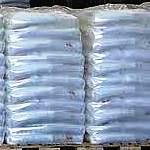
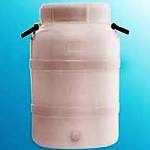

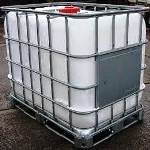
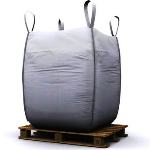
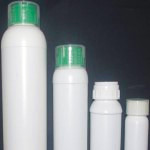
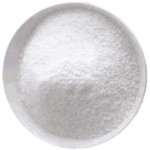
Vitamin E Acetate or DL alpha-Tocopherol Acetate or α-Tocopheryl Acetate CAS Number 52225-20-4 or 7695-91-2 or 58-95-7
For Properties Specifications Uses of Vitamin E Acetate or α-Tocopheryl Acetate Click Properties, Specifications, Uses, Price, Process of Vitamin E Acetate or α-Tocopheryl Acetate Manufacturer.
For For SDS MSDS Sheet of Vitamin E Acetate or α-Tocopheryl Acetate Click SDS Safety Data Sheet MSDS Sheet of Vitamin E Acetate or α-Tocopheryl Acetate Manufacturer.
The Properties, Specifications, Monograph and Uses of Vitamin E Acetate or α-Tocopheryl Acetate:
Vitamin E Acetate or DL alpha-Tocopherol Acetate or α-Tocopheryl Acetate is a fat-soluble antioxidant primarily used to protect body cells from oxidative damage, support immune function, and maintain healthy skin and eyes. While most people get enough from daily foods, oral supplements and topical oils are widely used for targeted health and cosmetic purposes. It is used for Antioxidant defense, Immune support, Blood and vessel health, Deficiency treatment, Targeted condition management, Moisturizing and barrier support, UV and environmental protection, Nail and scalp care, etc.
all-rac-Alpha-Tocopheryl Acetate BP Ph Eur Grade Specifications:
C31H52O3 --- 472.7 CAS 7695-91-2
Action and use: Used in prevention and treatment of vitamin E deficiencies.
DEFINITION
all-rac-2,5,7,8-Tetramethyl-2-(4,8,12-trimethyltridecyl)-3,4-dihydro-2H-1-benzopyran-6-yl acetate.
Content: 96.5 per cent to 102.0 per cent.
CHARACTERS
Appearance: Clear, colourless or slightly greenish-yellow, viscous, oily liquid.
Solubility: Practically insoluble in water, freely soluble in acetone, in anhydrous ethanol and in fatty oils.
IDENTIFICATION
First identification: A, B
Second identification: A, C
A Optical rotation: -0.01° to + 0.01°
Dissolve 2.50 g in anhydrous ethanol R and dilute to25.0 mL with the same solvent.
B Infrared absorption spectrophotometry.
C Thin-layer chromatography.
Related substances and Assay: To pass the test by Gas chromatography.
Protected from light.
Vitamin E Acetate IP Grade is also manufactured as per the monograph.
RRR-_-Tocopheryl Acetate FCC Food Grade Specifications:
D-α-Tocopheryl Acetate --- C31H52O3, Formula weight 472.75
CAS: 58-95-7
DESCRIPTION
RRR-α-Tocopheryl Acetate occurs as a colorless to yellow, clear, viscous oil. It is a form of vitamin E obtained by the vacuum steam distillation and acetylation of edible vegetable oil products. It may solidify on standing, and melts at about 25°. It is unstable in the presence of alkalies. It is insoluble in water; freely soluble in alcohol; and miscible with acetone, with chloroform, with ether, and with vegetable oils.
Function: Nutrient.
REQUIREMENTS
Labeling: All label claims that are in terms of International Units (IU) should be based on the following: 1 mg of RRR-α-Tocopheryl Acetate = 1.36 IU.
Identification:
A. Add, with swirling, 2 mL of nitric acid to 10 mL of the Test Solution from Optical (Specific) Rotation (below), and heat at about 75° for 15 min. A bright-red to orange color develops.
B. The retention time of the major peak (excluding the solvent peak) in the chromatogram of the Assay Preparation is the same as that of the Standard Preparation, both relative to the Internal Standard Solution, as obtained in the Assay.
Assay: Not less than 96.0% and not more than 102.0% of C31H52O3.
Acidity: Passes test.
Lead: Not more than 2 mg/kg.
Optical (Specific) Rotation [α]D: 25°: Not less than +24°.
The MSDS-SDS Hazard Statement of Vitamin E Acetate or α-Tocopheryl Acetate:
DL alpha-Tocopherol Acetate or α-Tocopheryl Acetate or Vitamin E SDS, Safety Data Sheet
MSDS Sheet, Material Safety Data Sheet
Section 1 - Chemical Product and Company Identification
Product Name & Other Names: DL alpha-Tocopherol Acetate or α-Tocopheryl Acetate or Vitamin E
CAS No.: 52225-20-4 or 7695-91-2 or 58-95-7.
EC Number: 231-710-0
Molecular Formula: C31H52O3
Molecular Weight: 472.74
Recommended uses and uses advised against (if any): Industrial and Oil & Gas Exploration
SUPPLIER: As per letterhead.
Section 2 - Hazards Identification
GHS, Globally Harmonized System Classification in accordance with 29 CFR 1910
Classification according to Regulation (EC) No 1272/2008
Not a hazardous substance or mixture according to Regulation (EC) No. 1272/2008.
This substance is not classified as dangerous according to Directive 67/548/EEC.
Labeling according to GHS USA & Regulation (EC) No 1272/2008
| GHS Label Elements NONE |
Signal Words: None
Precautionary statements:
P262: Do not get in eyes, on skin, or on clothing.
P264: Wash skin thoroughly after handling.
P280: Wear protective gloves/protective clothing/eye protection/face protection.
P270: Do not eat, drink or smoke when using this product.
P302+P352: IF ON SKIN: Wash with plenty of soap and water.
P305+P351+P338: IF IN EYES: Rinse cautiously with water for several minutes. Remove contact lenses, if present and easy to do. Continue rinsing.
P337+P313: If eye irritation persists: Get medical advice/ attention.
Section 3 - Composition, Information on Ingredients
Product Name & Other Names: DL alpha-Tocopherol Acetate or α-Tocopheryl Acetate or Vitamin E
CAS No.: 52225-20-4 or 7695-91-2 or 58-95-7.
EC Number: 231-710-0
Section 4 - First Aid Measures
Eyes: Immediately flush your eyes with plenty of water for at least 15 minutes, occasionally lifting the upper and lower eyelids. Get medical aid. Do NOT allow the victim to rub or keep eyes closed.
Skin: Flush skin with plenty of soap and water for at least 15 minutes while removing contaminated clothing and shoes. Get medical aid if irritation develops or persists. Wash clothing before reuse.
Ingestion: Do NOT induce vomiting. If the victim is conscious and alert, give 2-4 cups of milk or water. Never give anything by mouth to an unconscious person. Get medical aid.
Inhalation: Remove from exposure to fresh air immediately. If breathing is difficult, give oxygen. Get medical aid. Do NOT use mouth-to-mouth resuscitation. If breathing has ceased apply artificial respiration using oxygen and a suitable mechanical device such as a bag and a mask.
Notes to Physician: Treat symptomatically and supportively.
Section 5 - Fire Fighting Measures
General Information: As in any fire, wear a self-contained breathing apparatus in pressure-demand, MSHA/NIOSH (approved or equivalent), and full protective gear. During a fire, irritating and highly toxic gases may be generated by thermal decomposition or combustion.
Extinguishing Media: Use water spray, dry chemical, carbon dioxide, or chemical foam. Use agent most appropriate to extinguish fire. Do NOT get water inside containers.
Extinguishing Media Not recommended: Avoid using solid water jet as it may scatter the fire.
Special Information: In the event of a fire, wear full protective clothing and NIOSH-approved self-contained breathing apparatus with full face piece operated in the pressure demand or other positive pressure mode. At high temperatures under fire conditions, it may produce toxic or irritating fumes.
Section 6 - Accidental Release Measures
Personal precautions, protective equipment, environmental precautions and emergency procedures: Avoid breathing dust/fumes/gas/mist/vapors/spray. Use individual protective equipment (waterproof boots, suitable protective clothing, safety glasses, etc.).
Methods and materials used for containment cleanup procedures and Storage: Contain spilled material. Vacuum or sweep up material and place it into a suitable disposal container. Fine particles can cause a fire or explosion. Eliminate all ignition sources. Clean up spills immediately, observing precautions in the Protective Equipment section. Avoid generating dusty conditions. Remove all sources of ignition. Provide ventilation.
Section 7 - Handling and Storage
Precautions for safe handling: Apply according to good manufacturing and industrial hygiene practices with proper ventilation. Do not drink, eat, or smoke while handling. Use with adequate ventilation. Minimize dust generation and accumulation. Avoid breathing dust/fumes/gas/mist/vapors/spray. Avoid contact with eyes, skin, and clothing. Keep the container tightly closed. Avoid ingestion and inhalation. Use individual protective equipment (waterproof boots, suitable protective clothing, safety glasses, etc.).
Conditions for safe storage, including any incompatibilities: Store in cool, dry, and ventilated area away from heat sources and protected from sunlight in tightly closed original containers. Keep air contact to a minimum. Store protected from heat, sparks and ignition sources and incompatible materials. Avoid inhalation of dust/mist/vapor. Do not store with incompatible materials like oxidizing agents, reducing agents etc. Storage: 2C to Shipping may be at room temperature in continental USA, may vary elsewhere.
Section 8 - Exposure Controls, Personal Protection
Airborne Exposure Limits: None established by regulating bodies.
Ventilation System: A system of local and/or general exhaust is recommended to keep employee exposure as low as possible.
Personal Respirators (NIOSH Approved): For conditions of use where exposure to dust or mist is apparent and engineering controls are not feasible, a particulate respirator (NIOSH type N95 or better filters) may be worn.
Skin Protection: Wear impervious protective clothing, including boots, gloves, lab coat, apron, or coveralls, as appropriate, to prevent skin contact.
Eye Protection: Use chemical safety goggles and/or full-face shield where dusting or splashing of solutions is possible. Maintain eye wash fountain and quick-drench facilities in work area.
Other Control Measures: Maintain good housekeeping in work area. Handle in accordance with good industrial hygiene and safety practice.
Section 9 - Physical and Chemical Properties
Appearance: Pellets or Large Crystals or Viscous Liquid depending on the temperature.
Odor: No data found.
Odor threshold: No data found.
pH: No data found.
Relative density: about 0.96
Melting point/freezing point: 26.5C - 27.5°C.
Initial boiling point and boiling range: Decays without boiling at 240C.
Flash point: No data found.
Auto-ignition temperature: No data found.
Decomposition temperature: No data found.
Upper/lower flammability or explosive limits: No data found.
Vapor pressure: No data found.
Vapor density: No data found.
Evaporation rate: No data found.
Flammability (solid, gas): No data found.
Partition coefficient: n-octanol/water: No data found.
Solubility(ies): Insoluble in water.
Viscosity: No data found.
Section 10 - Stability and Reactivity
Chemical Stability: Stable under recommended temperatures and pressures.
Conditions to Avoid: Incompatible materials, dust generation, moisture, exposure to moisture.
Incompatibilities with Other Materials: Strong Oxidizing agents, Strong Reducing agents.
Hazardous Decomposition Products: Carbon monoxide, irritating and toxic fumes and gases, carbon dioxide.
Hazardous Polymerization: Will not occur.
Section 11 - Toxicological Information
LD50 Oral - Rat - male and female - > 10.000 mg/kg.
LD50 Dermal - Rat - male and female - > 3.000 mg/kg
Carcinogen: Not defined as carcinogen.
Mutagenic Effects: No data found.
Developmental Toxicity: No data found.
Reproductive Effects: No data found.
Section 12 - Ecological Information
Toxicity to fish: static test LC50 - Oncorhynchus mykiss (rainbow trout) - > 11 mg/l - 96 h.
Toxicity to daphnia and other aquatic invertebrates: static test EC50 - Daphnia magna (Water flea) - > 20,6 mg/l - 48 h.
Persistence and Degradability: No data found.
Bioaccumulation/ Accumulation: No data found.
Results of PBT and vPvB assessment: No data found.
Section 13 - Disposal Considerations
Whatever cannot be saved for recovery, or recycling should be managed in an appropriate and approved waste disposal facility.
Section 14 - Transport Information
DOT USA, TDG Canada and ADR/RID Europe: Not controlled.
IMO/IMDG & ICAO/IATA: Not controlled.
Section 15 - Regulatory Information
USA Section 311/312: None.
USA California Proposition 65: Not listed for cancer or reproductive harm.
Disclaimer:
**************************
Our company provides this MSDS sheet in good faith but makes no representation as to its comprehensiveness or accuracy. This SDS sheet is intended only as a guide to the appropriate precautionary handling of the material by a properly trained person using this product. The above information has been compiled from various sources and has the possibility of discrepancy and being out-dated information. Individuals receiving the information must exercise their independent judgment and do further search in determining its appropriateness for a particular purpose. In no case shall our company be liable to loss or damages by the product user.
**************************

Vitamin E Acetate or α-Tocopheryl Acetate Manufacturers, Suppliers, Exporters, Wholesalers:
King of Chemicals manufacturers

Plot No. 2900/46&47 + 2900/163to167, GIDC, Ankleshwar, Dist. Bharuch, India
India, USA, UAE
TEL: (Office) 91-22-65290111
email: info@kingofchemicals.com
Copyright and Usual Disclaimer is Applicable --- November 22, 2026
If I give you “My Word” Nobody can undo it.
If I sign an “Agreement” my Lawyer will undo it
Our products are for industrial and laboratory use only. The user must test the material before use. We are not despensing chemists or druggist and do not offer over the counter type (OTC) products for medical use by individuals.
| We and our associates manufacture pure chemicals surpassing Monograph Specifications of Analytical Reagent Standards, British & European Pharmacopoeia BP Ph Eur EP Standard, US Pharmacopoeia USP NF Standard, Indian Pharmacopoeia IP Standard, Japan Pharmacopoeia JP Standard, FCC Food Grade Standard. | |